
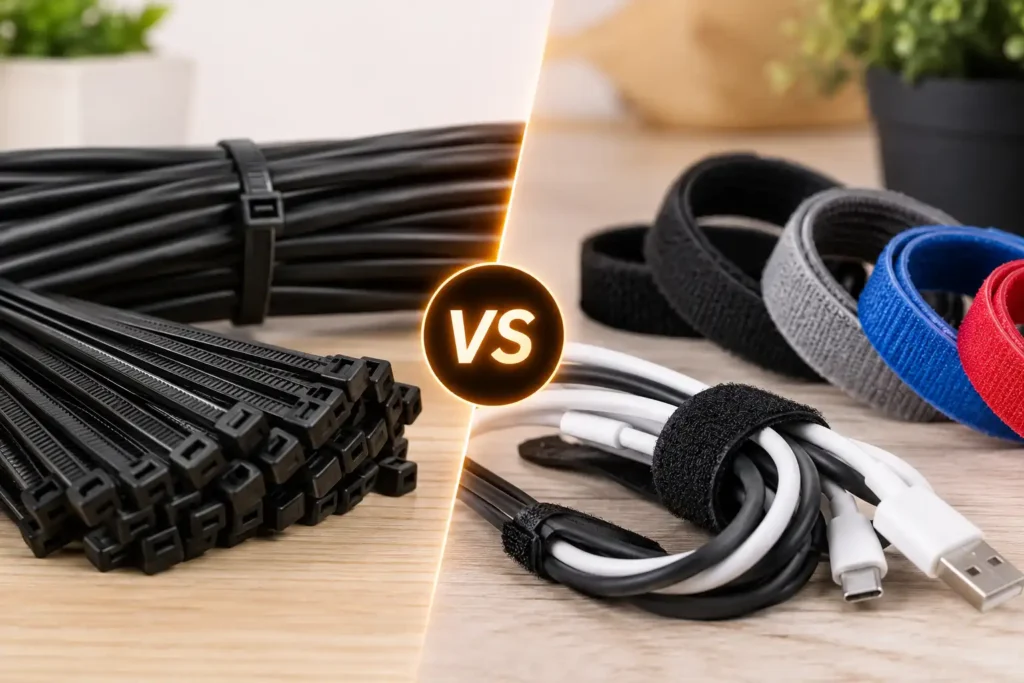
Walk into almost any home or office and you’ll spot the same problem. Wires everywhere. Behind the TV, under the desk, tangled inside a kitchen drawer, stuffed in a car glovebox. It’s not just messy either — a tangled cable can trip someone, get chewed by wear and tear, or just waste ten minutes of your life when you’re hunting for the right one.
So here’s the question I get asked a lot, whether it’s a friend setting up a new PC or a client wiring an office: cable ties or reusable fasteners? Both do the same basic job, but they’re really not the same tool at all. I’ve used both for years across home setups, offices, and a few industrial jobs, and honestly, the “right” answer depends entirely on what you’re trying to do.
This guide walks through both options — how they work, where each one wins, what they cost long-term, and which one fits your situation. And since I’m a bit biased toward quality gear, I’ll also point you toward Alzohr’s lineup, which is what I reach for most often these days.
You already know these, even if you didn’t know the name. Cable ties — or zip ties, if that’s what you grew up calling them — are thin plastic strips with a ratchet head. Loop it around your cables, pull the tail through, and it locks. Tight. Once it’s locked, that’s it. You’re not opening it again without scissors.
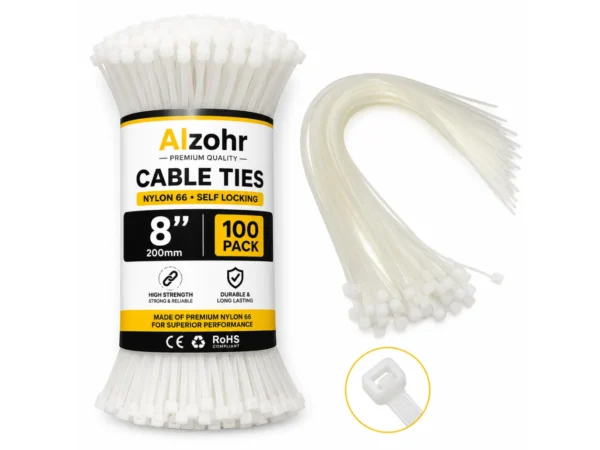
Not too short, not too long — 8 inch is the sweet spot for most bundling tasks. Alzohr cable ties handle everyday wire management without any fuss.Nylon 66 keeps every tie strong under daily pressure. Click it in once and it locks — no slipping, no loosening over time. Works great for home wiring, office setups, garden use, and light workshop jobs. 100 pieces per pack so you always have enough on hand.
A reliable size that fits most jobs perfectly.
That permanence is exactly why people love them. They’re cheap, they’re strong for their size, and Alzohr’s range runs anywhere from tiny 100mm ties for delicate earbud cables all the way up to 1200mm heavy-duty ones for thick industrial bundles. Color-coding is a nice bonus too — red for power, blue for data, whatever system works for you.
Reusable fasteners take a different approach entirely. Instead of a one-way lock, they use hook-and-loop material (think Velcro), adjustable clips, or quick-release tabs. Open them, add a cable, close them again. Do that a hundred times and they still work fine.
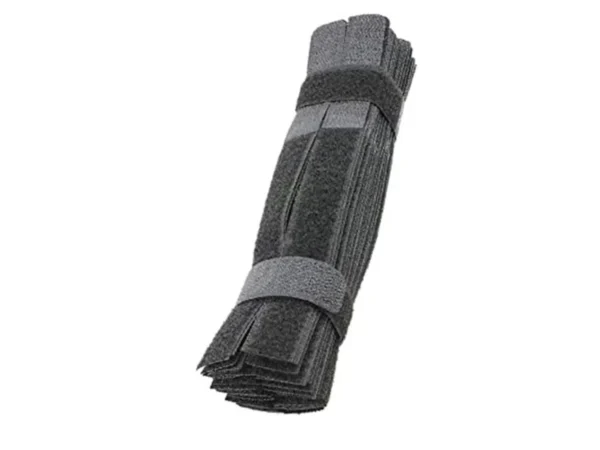
Cables all over the place? Al Zohr 18cm black nylon cable ties keep them sorted. Wrap, secure, done. Not happy with the spot? Open it up, move it, use it again. No waste, no buying new ones.Heavy duty nylon, flexible but tough. Holds firm without damaging your cables. 50 ties in the pack — enough for the whole house or office.
Stock is limited — order now.
This is the option I actually prefer for my own desk setup, mostly because I’m constantly swapping cables around — new monitor, new mic, whatever gadget I’m testing that week. They’re gentler on the cables too, which matters if you’re dealing with something like a fragile HDMI cable you don’t want to damage.
It comes down to permanence versus flexibility, honestly. Cable ties lock in once and stay locked. Reusable fasteners let you change your mind later. Most cable ties are made from Nylon 66, which holds up well outdoors and under stress. Reusable fasteners tend to use softer materials — fabric, silicone, or Velcro — built for comfort over raw strength.
Price plays into it too. A big bag of Alzohr cable ties costs next to nothing per piece. Reusable fasteners cost more upfront, but you’re not buying replacements every few months, so the math evens out over time if you use them a lot.
If we’re just talking raw strength, cable ties win. No contest. They don’t budge, even in rough conditions — outdoors, in a car engine bay, on a construction site. Alzohr makes UV-resistant and extra-heavy versions specifically for that kind of abuse.
Reusable fasteners aren’t as tough, but that’s not really their job. They’re built for indoor, everyday use — protecting delicate cables from nicks and cuts rather than surviving a storm. If you’re rearranging your gaming setup every few months, this is the smarter pick anyway.
On paper, cable ties look like the obvious money-saver. You can buy hundreds for what a handful of reusable fasteners costs. But that math only works if you’re not constantly cutting and replacing them.
If you rearrange things often, reusable fasteners from Alzohr end up cheaper over a year or two, since you’re not buying bags of new ties every month. For a one-off job — wiring a garage, hanging permanent outdoor lights — cable ties are still your best bet, price-wise.
This one’s worth thinking about. Zip ties are single-use plastic, and they add up in landfills faster than people realize. Reusable fasteners cut down on that waste significantly — one piece can replace dozens of disposable ties over its life.
Alzohr has been pushing toward more recyclable and long-life reusable options lately, which I appreciate. It’s a small change, but if enough people switch even part of their setup over, it adds up.
There are a few jobs where cable ties are simply the right call:
Basically, anywhere you want a “set it and forget it” solution, grab the ties.
On the flip side, reusable fasteners make more sense when things change often:
If you know you’ll be back in there next month adjusting something, save yourself the hassle and go reusable.
Picking the right size actually matters more than people expect. Here’s a quick breakdown of what Alzohr offers:
| Size | Width | Available Colors | Material | Best Use Case |
|---|---|---|---|---|
| 100mm | 2.5mm | Black, White, Red, Blue, Yellow, Green | Nylon 66 | Small wire bundles, home electronics |
| 120mm | 2.5mm | Black, White, Red, Blue, Yellow | Nylon 66 | Desk cables, phone chargers |
| 150mm | 3.6mm | Black, White, Red, Blue, Green, Orange | Nylon 66 | Light bundling, office cables |
| 180mm | 3.6mm | Black, White, Red, Blue | Nylon 66 | Medium wire groups, appliances |
| 200mm | 3.6mm | Black, White, Red, Blue, Yellow | Nylon 66 | General electrical wiring |
| 250mm | 4.8mm | Black, White, Red, Blue, Green | Nylon 66 | Home wiring, garden setups |
| 280mm | 4.8mm | Black, White, Red, Blue | Nylon 66 | Multiple cable bundles |
| 300mm | 4.8mm | Black, White, Red, Blue, Yellow, Green | Nylon 66 | Server & network cables |
| 350mm | 4.8mm | Black, White, Red, Blue | Nylon 66 | Large cable bundles |
| 370mm | 4.8mm | Black, White, Red | Nylon 66 | Industrial cable runs |
| 400mm | 4.8mm | Black, White, Red, Blue, Green | Nylon 66 | Heavy-duty bundling |
| 450mm | 4.8mm | Black, White, Red | Nylon 66 | Outdoor & construction wiring |
| 500mm | 7.6mm | Black, White, Red, Blue | Heavy Nylon 66 | Thick cable bundles, industrial use |
| 550mm | 7.6mm | Black, White, Red | Heavy Nylon 66 | Large-scale wiring projects |
| 600mm | 7.6mm | Black, White, Red, Blue | Heavy Nylon 66 | Cable trays, factory wiring |
| 650mm | 7.6mm | Black, White, Red | Heavy Nylon 66 | Heavy industrial applications |
| 700mm | 7.6mm | Black, White, Red | Heavy Nylon 66 | Bundling large pipes/cables |
| 750mm | 9mm | Black, White, Red | Extra Heavy Nylon | Very heavy-duty industrial use |
| 800mm | 9mm | Black, White, Red | Extra Heavy Nylon | Large machinery wiring |
| 900mm | 9mm | Black, White, Red | Extra Heavy Nylon | Big bundles, marine use |
| 1000mm | 9mm | Black, White, Red | Extra Heavy Nylon | Extra-large cable groups |
| 1200mm | 9mm | Black, White, Red | Extra Heavy Nylon | Heaviest-duty industrial jobs |
Note: Colors and widths can be customized based on stock and packaging options, including self-locking, releasable, and UV-resistant variants.
Alzohr brings you premium-quality cable ties in every size and color you need — strong, durable, and built to last.
Shop the Full Alzohr Cable Ties Collection Today!
Browse our full range of high-quality plastic cable ties and reusable fasteners, built for home, office, and industrial use. Shop now at Alzohr!
Plastc Cable Ties NowAsk yourself a few honest questions. Is this setup permanent, or will it change in six months? How heavy are the bundles you’re dealing with? Do you care more about upfront cost or long-term savings? Does reducing plastic waste matter to you personally?
If you answered “permanent and heavy-duty,” go with Alzohr cable ties. If you answered “flexible and changing,” reusable fasteners are the better call. Honestly, a lot of people — myself included — end up using both. Ties for the permanent backbone, fasteners for the spots you’re always adjusting.
Group your cables by function — power, data, audio — so things stay logical. Use colored ties or labels if you’ve got a complicated setup. Don’t overtighten; leave a little slack so you’re not stressing the cable itself. If you’re using reusable fasteners, give them a quick check every six months to make sure they’re still holding well. And keep a small stash of both types in your toolkit, because you’ll always need one eventually.
Can I reuse a regular cable tie once it’s locked?
Not really. Most are designed to lock permanently, so you’ll need to cut it off and use a new one. If you want something reusable, go with fasteners instead.
Which option handles heavy-duty cables better?
Cable ties, hands down. They’re built for industrial and outdoor use where things need to stay put no matter what.
Are reusable fasteners worth the higher price?
If you rearrange your setup often, yes — you’ll save money over time compared to constantly buying new ties.
Do cable ties damage wires?
Only if you overtighten them. Use the right size for the job and leave a bit of slack, especially with delicate cables.
There’s no single “best” option here — just the best option for what you’re doing. Cable ties give you strength and permanence for next to nothing. Reusable fasteners give you flexibility that pays off if your setup keeps changing. Either way, quality matters more than people think, and that’s really why I keep coming back to Alzohr. Take a look at their full range of cable ties and reusable fasteners, and finally get your cables under control.