
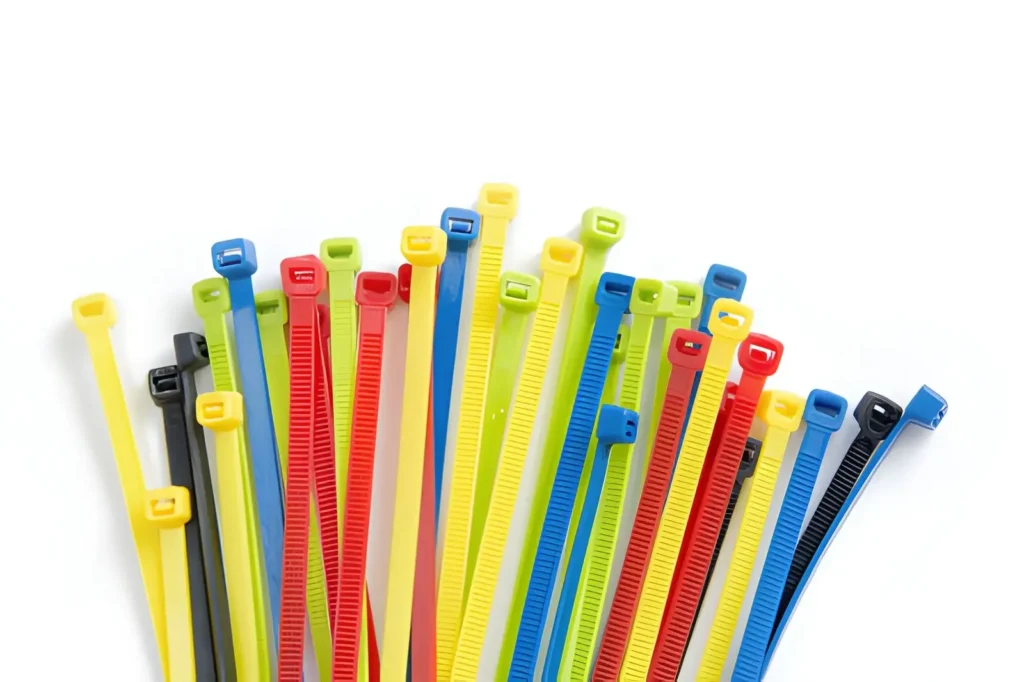
Let me be honest with you. I used to grab whatever cable ties were sitting on the shelf without thinking twice. Then one day, a bundle of wires in my garage just snapped loose — right in the middle of a project. That is when I realized something simple: not all cable ties are equal, and picking the wrong one actually costs you.
If you have ever stood in a hardware store staring at fifteen different options and had no idea what to pick, this guide is for you. Alzohr breaks it down in plain language — no jargon, no confusion.
Here is something most people skip over. A cable tie is not just a cable tie. One is made for a drawer full of charging cables. Another is built to hold wiring under a car hood at high heat. Use the wrong one in the wrong place and it either snaps, cracks, or slowly loosens over time.
That small mistake leads to messy setups, safety hazards, and money wasted on re-doing the same job. Spend two minutes understanding what you actually need — and you will not have to touch it again.
Most plastic cable ties are made from a material called Nylon 6/6. It is tough, slightly flexible, and handles temperature changes reasonably well. Some are made from polypropylene, which is lighter but less strong. Others come with UV stabilizers baked into the material — these are the ones built for outdoor life.
Why does material matter? Because nylon behaves differently in heat, cold, and sunlight. A tie that works perfectly inside your home office might crack within weeks if left outside in direct sun. Knowing the material tells you where it belongs.
You do not need to be an engineer to make a good decision here. You just need to ask the right questions before you buy. Here are the ten things worth thinking about — each one matters more than price alone.
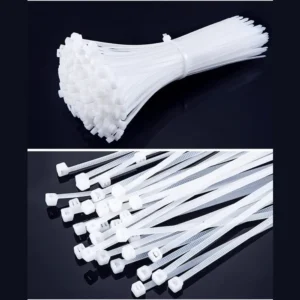
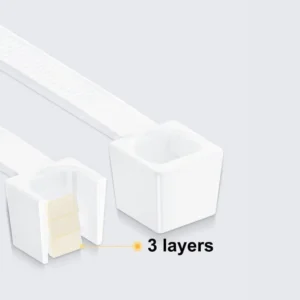

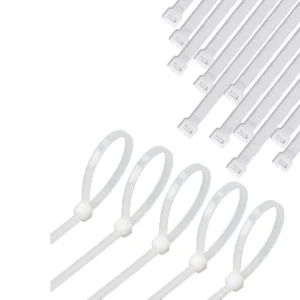
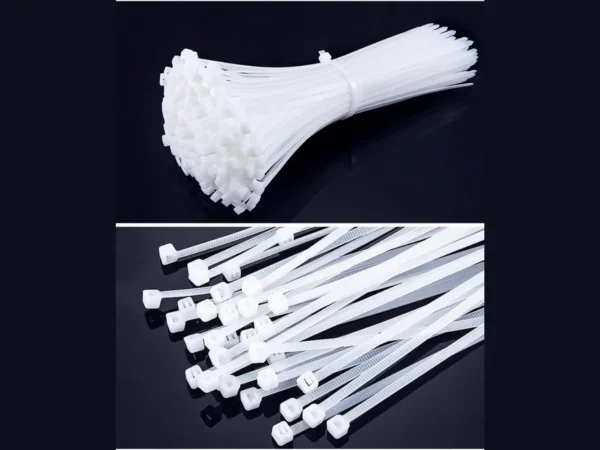
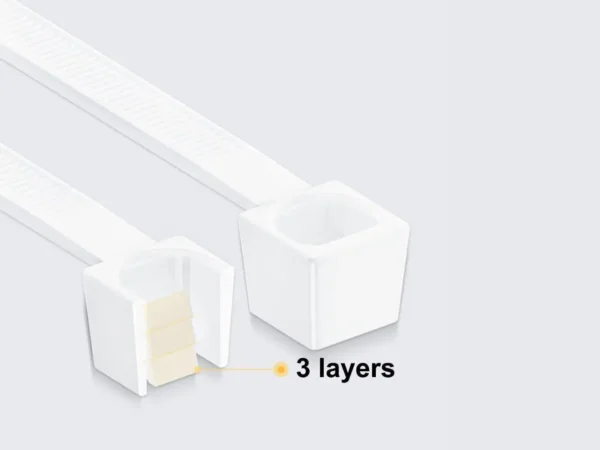

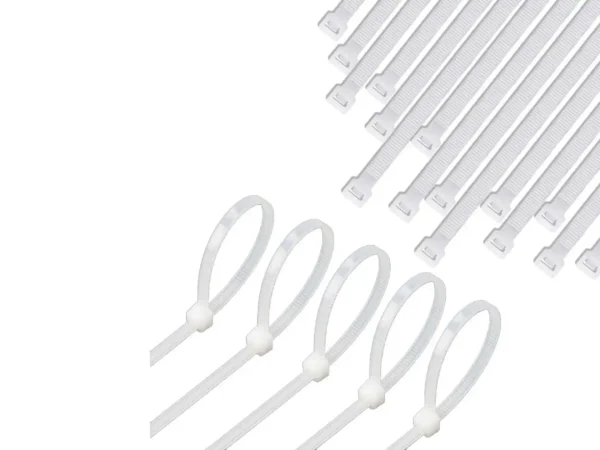
These 12-inch cable zip ties are made from strong nylon and built for everyday use. Each pack includes 100 white ties with a firm self-locking grip that holds cables securely in place.
With a tensile strength of up to 50 lbs, they’re suitable for managing wires, cords, and small items at home, office, or workshop. The anti-slip teeth ensure a tight hold, while the flexible design makes them easy to tighten and trim.
They work well in different temperatures from -40°C to +85°C, so you can use them indoors or outdoors without worry.
This sounds obvious but people get it wrong constantly. A tie that is too short will not close around your bundle. One that is too long becomes messy and hard to trim neatly. Measure your cable bundle’s diameter before anything else. Then add a little extra length for comfort. Width matters too — thicker ties carry more load. For a handful of light cables, a narrow tie is fine. For a thick bundle of heavy wires, go wider.
Tensile strength is how much pulling force a tie can take before breaking. Light-duty ties sit around 18 lbs. Heavy-duty ones push past 175 lbs easily. For home use — desk cables, kitchen appliance cords, media setups — light or medium strength is more than enough. But for automotive wiring, outdoor fence installations, or industrial panels, you genuinely need the higher-rated ones. Do not assume. Match the number to the actual load the tie will carry.
Regular nylon breaks down faster than you expect under direct sunlight. Within a season, standard ties left outside become brittle and crack when touched. UV-resistant cable ties are treated during manufacturing to block that damage. They are worth every extra penny for anything going outside — garden cable runs, exterior lighting, solar panel installations, rooftop equipment, or vehicles. Black ties are naturally more UV-resistant than white ones too, because of the carbon content in the material.
Standard cable ties handle temperatures between roughly -40°F and 185°F. That covers most homes and offices without any problem. But if you are working near motors, engine bays, industrial heating equipment, or cold storage facilities, that range is not enough. Specialized high-heat or low-temperature cable ties exist for exactly these situations. Always read the operating temperature listed on the packaging. It is one of the most overlooked specs — and one of the most important ones for safety.
Black ties resist UV rays better. Natural or white ties are for clean indoor work. But in professional environments, color is actually a system. Electricians use different colors for different circuits. Data center technicians color-code by network segment. It speeds up troubleshooting and prevents mistakes. Even at home, using different colors for power cables versus data cables makes organizing your setup much faster. Color is not decoration — it is a practical tool when used with intention.
Standard cable ties lock once and stay locked. To remove them, you cut them off and throw them away. Releasable ties have a small release tab. Press it, and the tie opens. You can adjust it, reuse it, and reposition cables whenever needed. For home entertainment systems, lab equipment, or any wiring that gets updated regularly, releasable ties save both money and frustration. They are slightly less strong than standard ones — but for most everyday use, they are absolutely strong enough.
Most people never look at the head of a cable tie. That is a mistake. The locking head contains a small internal mechanism — a ratchet — that grabs the serrated tail and holds it. A poorly made head slips under load. It may click into place but release slowly over time under vibration or heat. High-quality heads grip cleanly, click firmly, and do not budge. Before committing to a bulk purchase, test a few ties by hand. If the lock feels sloppy or inconsistent, walk away from that brand.
Every cable tie has a listed maximum bundle diameter. This is the widest bundle it can wrap around and still lock properly. Exceed that diameter, and the tail does not reach the head — you end up with a tie that cannot close, or one that barely grips the last few teeth. For large cable bundles, choose longer ties with a wider rated diameter. For single thin cables, shorter ties keep things neat and tidy. Always check this spec — it is printed on every decent product label.
For home use, certifications are less critical. For professional work — electrical panels, automotive systems, construction sites, or food processing environments — they matter a great deal. Look for UL listing, RoHS compliance, or REACH certification. These show the product was independently tested for strength, safety, and environmental standards. Certified ties cost a little more. But they protect you from liability, meet industry codes, and perform reliably when it counts. Ask for certification documentation when buying large quantities.
The cheapest cable ties on the market are cheap for a reason. Thin walls, weak locking heads, inconsistent nylon quality — these are the trade-offs that show up after a few months in real conditions. Alzohr always suggests thinking about cost-per-use instead of cost-per-pack. A slightly more expensive, well-made tie that lasts three years is a much better deal than a budget pack that fails in three months. Read reviews. Ask questions. Buy from sources that stand behind what they sell.For a complete buying guide, you can also read:
What size cable tie should I start with for basic home use?
For most home jobs — organizing desk cables, bundling cords behind a TV, or tidying up a home office — a 6-inch tie with medium tensile strength works well. It handles small to medium bundles cleanly without being overkill. Keep a mix of 4-inch and 8-inch ties on hand too, so you are covered for both thin single cables and thicker grouped bundles.
My cable ties keep snapping outdoors. What am I doing wrong?
You are most likely using standard indoor-grade ties outside. Regular nylon breaks down quickly under UV exposure and temperature swings. Switch to UV-stabilized cable ties — or at minimum, use black ties which have better natural UV resistance. For extreme outdoor conditions, look specifically for ties rated for outdoor use with a confirmed UV protection specification on the label.
Is there a difference between releasable and reusable cable ties?
These terms are often used interchangeably, but they mean the same thing in practice — a tie you can open, adjust, and close again. The key difference compared to standard ties is the release tab on the locking head. They are slightly less grippy under heavy load but work perfectly for most home, office, and light professional applications where cables are occasionally moved or updated.
How do I know if a cable tie brand is actually good quality?
Look for three things: the material should be listed as Nylon 6/6, the locking head should click firmly without slipping when you test it by hand, and the product should carry at least one recognized certification like UL or RoHS. Reviews from electricians or professional installers are also a reliable signal. Avoid brands that list no material specifications — quality manufacturers are always transparent about what their product is made from.
A plastic cable tie weighs almost nothing. Costs almost nothing. And yet, the right one keeps your cables organized safely for years. The wrong one fails quietly — and sometimes at the worst possible moment.
You now know what to look for. Size, tensile strength, UV resistance, temperature range, color, locking quality, certifications — none of it is complicated once you understand why it matters.
At Alzohr, our entire focus is helping you make smarter decisions on things that actually affect your daily life and work. We cut through the noise and give you straight, honest information — so you never waste money on the wrong product again.
Take what you learned here and buy with confidence. Alzohr has your back.